What Can I Do to Help Climate Chage
Ten simple ways to act on climate change

We know that climate change is happening – only there are plenty of things individuals can do to help mitigate information technology. Hither's your handy guide to the virtually effective strategies.
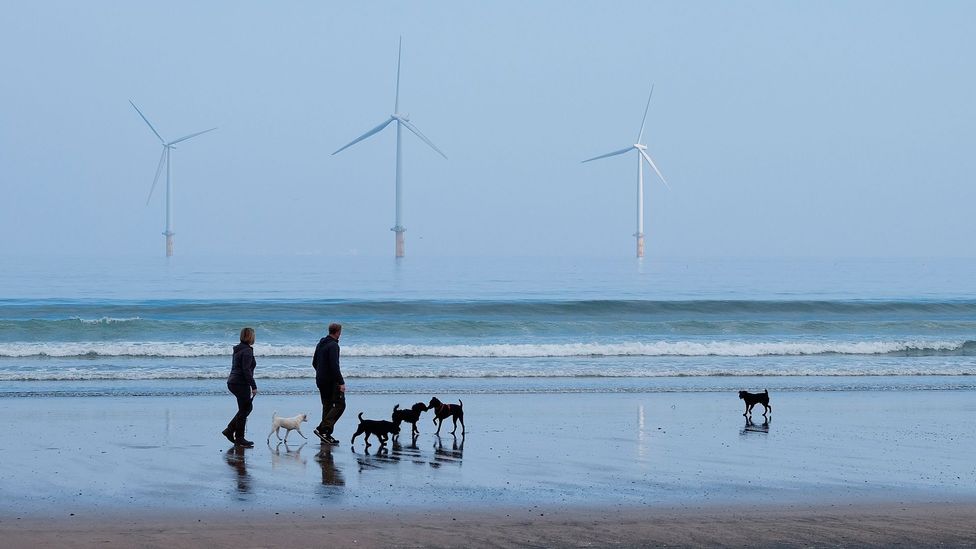
To mitigate climate change, the number one goal is to replace fossil fuels with renewable energy sources (Credit: Getty)
The road towards that transition includes daily decisions within your reach – like driving and flying less, switching to a 'green' energy provider and changing what yous eat and buy.
Of course, information technology'south true that climatic change won't be solved past your buying or driving habits solitary – although many experts agree these are important, and can influence others to brand changes also (more on that after). Other changes are needed that can only be made on a bigger, organisation-broad basis – similar revamping our subsidy organization for the energy and food industries, which proceed to reward fossil fuels, or setting new rules and incentives for sectors like farming, deforestation and waste material management.
1 skillful example of the importance of this regards refrigerants. An advocacy grouping of researchers, business concern-people and NGOs called Drawdown institute that getting rid of HFCs (chemicals used in fridges and air workout) was the number-one most effective policy to reduce emissions. That's because they are upwardly to 9,000 more warming for the temper than CO2. The good news is that we accept fabricated global progress on this, and two years agone 170 countries agreed to start phasing out HFCs in 2019.
This is important considering nosotros need "unprecedented changes in all aspects of society to deal with climate change, says the IPCC report. "Everyone is going to have to be involved," says Debra Robert, co-chair of the Intergovernmental Console on Climatic change (IPCC), the group tasked with the report.
2. Irresolute how industries are run or subsidised doesn't sound similar annihilation I tin can influence... tin I?
You tin can. Individuals demand to exercise their rights both as citizens and as consumers, Robert and other experts say, putting pressure on their governments and on companies to make the system-wide changes that are needed.
Another manner, increasingly undertaken by universities, organized religion groups and recently even at a countrywide level, is to 'divest' funds out of polluting activities – such every bit avoiding stocks in fossil fuels, or banks that invest in high-emission industries. By getting rid of financial instruments related to the fossil fuel manufacture, organisations tin can both take climate action and reap economic benefits.
3. Other than that, what's the best daily activeness I tin can accept?
Ane 2022 study co-authored by Lund University's Nicholas ranked 148 individual actions on climate change according to their touch. Going car-free was the number-ane most effective activity an individual could take (except not having kids – only more on that on that later). Cars are more polluting compared to other means of transportation like walking, biking or using public ship.
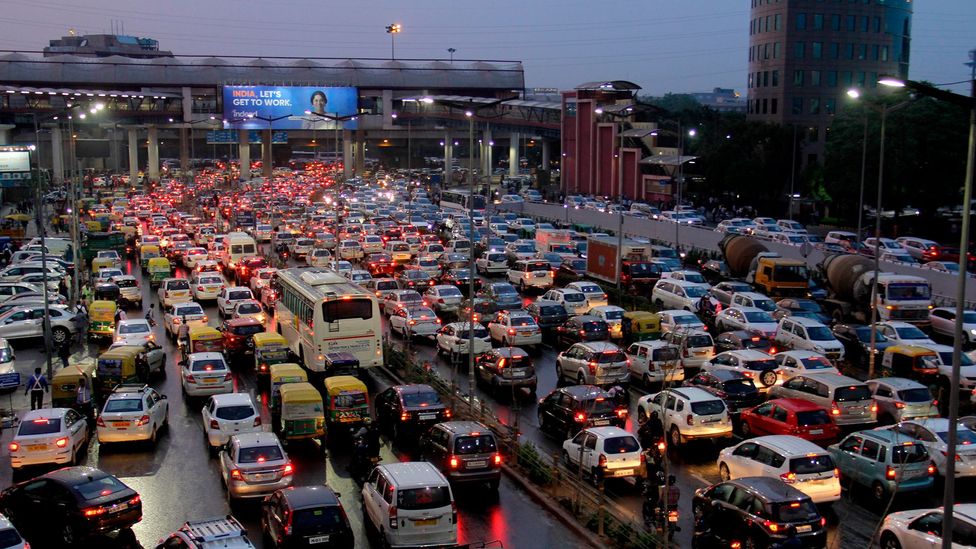
One ranking establish that going car-costless is the nearly effective action one person tin can take (Credit: Getty)
In industrialised countries such as European nations, getting rid of your car can reduce 2.5 tonnes of CO2 – about one-fourth of the boilerplate yearly emissions (9.2 tonnes) contributed by each person in adult countries of the Organisation for Economical Co-operation and Evolution (OECD).
"We should choose more efficient vehicles and, whenever possible, switch directly to electrical vehicles," says Maria Virginia Vilarino, co-author of the mitigation chapter in the IPCC's latest report.
iv. But isn't renewable energy extremely expensive?
Really, renewables like current of air and solar are becoming increasingly cheap across the globe (although terminal costs are subject to local circumstances). The latest study from the International Renewable Energy Bureau (Irena) plant that several of the most unremarkably used renewables, like solar, geothermal, bioenergy, hydropower and onshore wind, volition be on par with or cheaper than fossil fuels by 2020. Some are already more toll-effective.
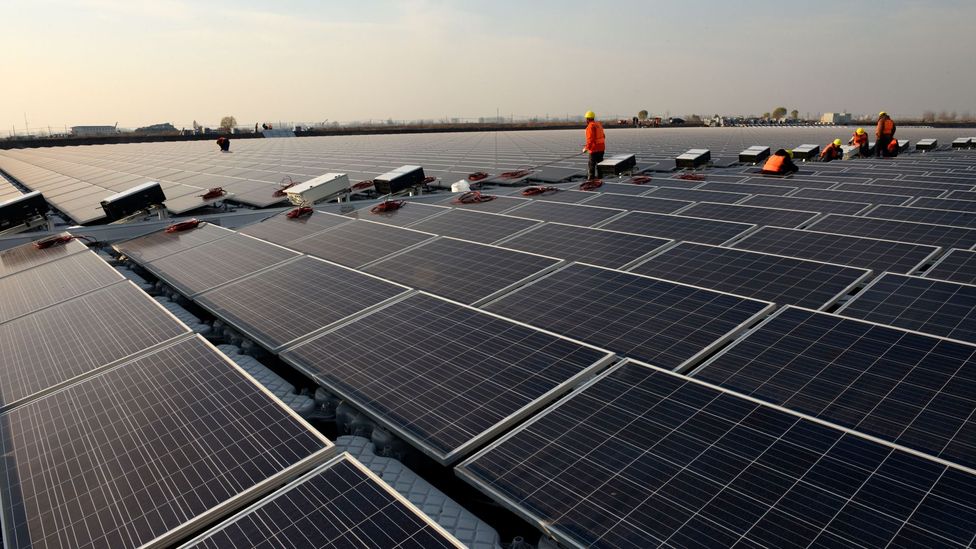
Solar free energy is now the cheapest source of electricity for many households in Latin America, Asia and Africa (Credit: Getty)
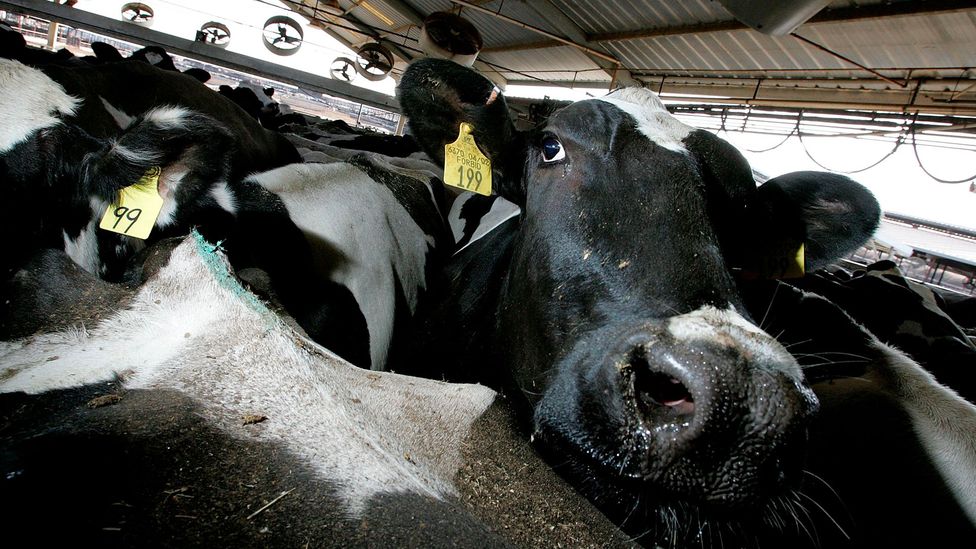
If cattle were their own nation, they'd be the globe's tertiary largest emitter of greenhouse gases (Credit: Getty)
The meat industry contributes to global warming in 3 major ways. Firstly, cows' burping from processing food releases lots of methane, a greenhouse gas. Secondly, nosotros feed them with other potential sources of food, similar maize and soy, which makes for a very inefficient process. And finally, they as well crave lots of water, fertilisers that can release greenhouse gases, and plenty of land – some of which come from cleared forests, another source of carbon emissions.
The clothing sector makes up most 3% of the globe'due south CO2 emissions (Credit: Getty)
International transport, including maritime and air shipping, likewise has an impact. Groceries shipped from Chile and Australia to Europe, or the other way around, have more 'food miles' and usually a college footprint than local produce. But this is not always the instance, as some countries grow out-of-season crops in free energy-intensive greenhouses – so the best approach is to swallow food that is both locally grown and seasonal. Nevertheless, eating vegetarian nevertheless beats just purchasing local.
8. Should I call back virtually how many children I accept (or don't have)?
Nicholas's report ended that having fewer children is the all-time way to reduce your contribution to climatic change, with almost lx tonnes of CO2 avoided per yr. But this effect has been contentious – and it leads to other questions.
One is whether yous are responsible for children's climate emissions, and the other is where are these babies born.
If you are responsible for your kids' emissions, are your parents responsible for yours? And if you are not, how should nosotros consider the fact that more people volition likely have more carbon emissions? We also could inquire whether having offspring is a homo right across questioning. And we could ask if having children is necessarily a bad thing for solving climatic change: our challenges may mean nosotros volition need more than trouble-solvers in future generations, not fewer.
Those are hard, philosophical questions – and nosotros're non going to attempt to answer them here.
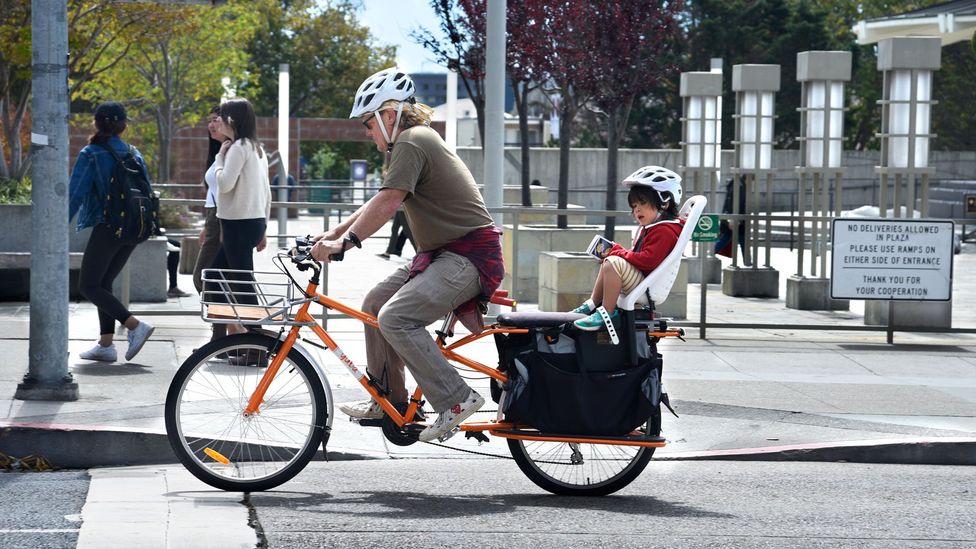
Children lead to more CO2 emissions – just they may also exist future environmentally-minded trouble-solvers (Credit: Getty)
What we do know is that no two people take the aforementioned emissions. Although the average human being releases around 5 tonnes of CO2 per year, each country has very different circumstances: developed nations similar the Us and South korea take higher national averages (16.5 tonnes and 11.five tonnes per person, respectively) than developing countries similar Islamic republic of pakistan and Philippines (around one tonne each). Even within national borders, richer people accept higher emissions than people with less access to goods and services. So if y'all choose to take this question into account, y'all have to remember that it's not only nigh how many children you have – information technology's where (and who) you are.
9. Simply if I eat less meat or take fewer flights, that'south simply me – how much of a divergence can that actually make?
Actually, it's non but you lot. Social scientists take establish that when one person makes a sustainability-oriented decision, other people do too.
Hither are 4 examples:
- Patrons at a United states of america cafe who were told that thirty% of Americans had started eating less meat were twice as probable to order a meatless luncheon.
- An online survey showed that of the respondents who know someone who had given up flying because of climate change, half of them said they flew less as a upshot.
- In California, households were more than probable to install solar panels in neighbourhoods that already take them.
- Community organisers trying to get people to install solar panels were 62% more successful in their efforts if they had panels in their firm besides.
Social scientists believe this occurs because we constantly evaluate what our peers are doing and we adjust our beliefs and actions appropriately. When people run across their neighbours taking environmental action, similar conserving energy, they infer that people like them also value sustainability and feel more compelled to act.
10. What if I just can't avoid that flight, or cut down on driving?
If you simply tin can't make every alter that's needed, consider offsetting your emissions with a trusted green projection – not a 'get out of jail free card', just some other resource in your toolbox to compensate that unavoidable flight or car trip. The UN Climate Convention keeps a portfolio of dozens of projects around the earth y'all can contribute to. To find out how many emissions you demand to 'buy' dorsum, you can use its handy carbon footprint reckoner.
Whether you are a coffee farmer in Colombia or a homeowner in California, climate change will take an touch on your life. Only the opposite is also truthful: your actions will influence the planet for the coming decades – for meliorate or for worse.
--
Diego Arguedas Ortiz is a science and climate change reporter for BBC Future. He is @arguedasortiz on Twitter.
Join 900,000+ Future fans by liking u.s.a. on Facebook , or follow united states on Twitter or Instagram .
If you liked this story, sign upwardly for the weekly bbc.com features newsletter , called "If You lot Just Read 6 Things This Week". A handpicked selection of stories from BBC Hereafter, Civilisation, Majuscule, and Travel, delivered to your inbox every Friday.
Source: https://www.bbc.com/future/article/20181102-what-can-i-do-about-climate-change
0 Response to "What Can I Do to Help Climate Chage"
Postar um comentário